
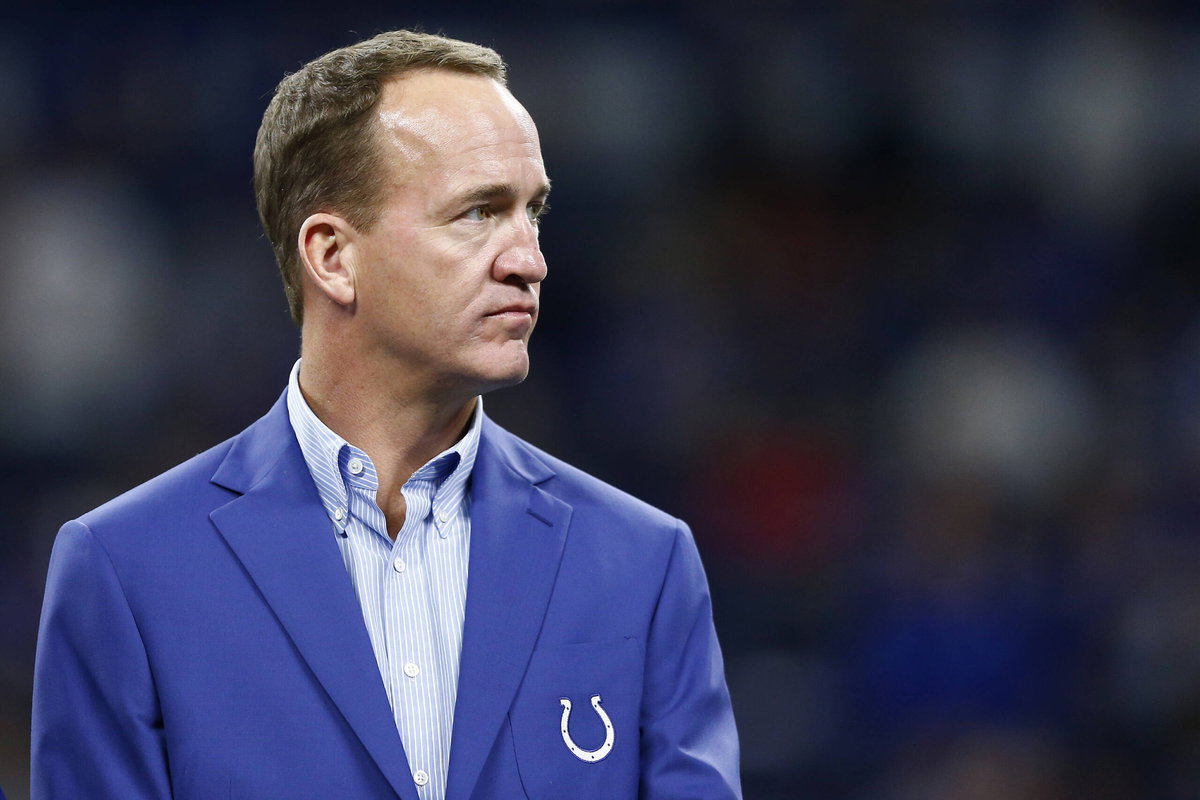
In January 2011, the Denver Broncos handed John Elway the keys to their football operation after a 4–12 season. The Hall of Fame quarterback now had to rebuild a team from the front office, not the field. A year later, Elway faced another pivotal call. Tim Tebow had just led Denver to a playoff win, but Elway pursued a different quarterback: a veteran recovering from four neck surgeries who had missed the entire 2011 season.
Watch What’s Trending Now!
That quarterback was Peyton Manning. After Indianapolis released him in March 2012, Manning signed a five-year deal with Denver, choosing the Broncos over other interested teams. He threw for 4,659 yards in his first season, led Denver to the playoffs and eventually helped the franchise win Super Bowl 50. So maybe that is why now…
“Oooh, Dan Patrick just said that he got information that we should expect that the Colts’ first call will be to Peyton Manning for advice and possibly to bring him in as the next GM,” NFL journalist Andrew Perloff reported on X.
However, as of now, no official confirmation has come from Peyton Manning or the Colts’ side, in fact his clearest public comments point in the opposite direction of the idea.
Indianapolis fired general manager Chris Ballard on Monday morning, following a 26-20 home loss to the previously winless Tennessee Titans. The dismissal ended Ballard’s nearly 10-year tenure, during which the Colts went 72-82-1 in the regular season and 1-2 in the playoffs after he was hired in January 2017.
According to the Colts owner and CEO Carlie Irsay-Gordon, the move was a mid-season decision to avoid unnecessary delay in rebuilding the Colts into a championship unit.
While the Week 6 loss to the Titans was the breaking point, the decision to fire Ballard stems from years of stagnation and a series of roster construction failures.
In the Week 6 game, the Colts squandered a 13-0 halftime lead at home to an 0-5 division rival. The collapse drew boos from the home crowd and loud stadium chants of “Fire Ballard.”
Following Andrew Luck’s shocking retirement in August 2019, weeks before the season began, Ballard failed to secure a stable long-term answer at quarterback. This included cycling through stopgaps, extending Daniel Jones, and spending the No. 4 pick in 2023 on Anthony Richardson Sr., who was ultimately deemed a bust.
Under Ballard, the Colts made the playoffs just twice (2018 and 2020) and never won an AFC South title. The team has also lost 11 of its last 13 games, stretching back to a late-season collapse in 2025.
That failure at quarterback is where the Manning idea comes from. He is one of the greatest quarterbacks in NFL history, with over 70,000 passing yards, and he played 13 seasons with Indianapolis. A hire like that would put a proven evaluator of the position at the top of the Colts’ draft room. It would also do a great deal for a disgruntled fan base: Manning’s No. 18 has been retired, and his statue already stands outside Lucas Oil Stadium. Both were announced in 2017, the same winter owner Jim Irsay ruled him out for the GM job.
The part that complicates it is Manning himself. In a 2020 interview, he said he had spoken with people about front-office jobs but never received a formal written offer, describing those talks as teams gauging his interest while he asked about their plans. In 2024, he was blunter. Asked about running an NFL team, he told The Denver Post:
“I don’t think that’s anywhere on my radar by any means.”
He said he enjoys being an ambassador for the Broncos, the Colts and the University of Tennessee, and is content to stay connected to football without running a team’s operations. Nothing in the latest report suggests that has changed; it describes possible contact, not an interview or an agreement.
This has also happened to the Colts before. After firing general manager Ryan Grigson in January 2017, Irsay confirmed he and Manning had discussed Manning’s future, then said Manning was not a candidate for the job and that no serious negotiations had taken place. Ballard was hired instead.
The strongest case for Manning comes from the man who knew him best as a young player. Bill Polian, the Hall of Fame executive who made Manning the first overall pick in 1998, said in 2016 that Manning could do the job. During their 14 years together in Indianapolis, Polian said, Manning would talk through draft prospects, college players and the strengths and weaknesses of opponents across the league. His summary to NFL.com:
“He is a football nerd, as am I.”
Polian went further, saying Manning could move quickly into a role like the one Elway holds in Denver. There is a wrinkle, though: Irsay fired Polian in January 2012, along with his son Chris, who was then the Colts’ general manager, after a 2-14 season. The loudest endorsement of Manning as an executive comes from someone the franchise itself pushed out.
Manning’s connection to young quarterbacks is also real. His family has run the Manning Passing Academy at Nicholls State in Louisiana since 1996, which keeps him in regular contact with college and high school passers. For a Colts franchise that has struggled to find a lasting successor to Andrew Luck, that kind of exposure is particularly relevant.
A GM’s work reaches well past the quarterback room, though. The job means weighing offensive and defensive linemen, defensive backs, special-teamers, draft-pick value and contracts. Manning spent four seasons in Denver watching Elway do that, and a 2017 Sports Illustrated report noted he paid close attention.
Watching is not the same as deciding, and Elway is a useful example of how much that gap can matter: when Denver hired him in 2011, he had never held an NFL front-office job. His executive experience was mostly with the Arena Football League’s Colorado Crush, a team he co-owned.
Away from football, Manning founded Omaha Productions in 2020. The company makes sports and entertainment content, including ESPN’s ManningCast, and has drawn outside investment as it has grown. That shows he can build and run a business, but not that he can run a scouting department or manage a salary cap.
The gap is simple: Manning has never run an NFL front office. A GM has to:
- Build and manage a scouting department
- Evaluate talent at every position
- Negotiate contracts within salary-cap limits
- Decide when to draft, trade, extend or release players
- Hire coaches and keep them aligned with ownership
Those who worked with him say his preparation and football knowledge could help him learn these duties. That is an endorsement of potential, not a track record. Add Manning’s own stated reluctance, and the question for Indianapolis is less whether he is qualified than whether he wants it. The Colts would have to establish that before any hiring discussion could begin.