
In the 1990s, two close friends helped turn the business of youth basketball into something much bigger. Sonny Vaccaro and George Raveling were once so close that Raveling served as the best man at Vaccaro’s wedding. But their paths eventually split, with Vaccaro moving to Adidas and Raveling becoming one of the key figures behind Nike’s grassroots basketball program.
Watch What’s Trending Now!
Their rivalry helped shape the shoe-company competition that would eventually dominate America’s youth basketball scene. Nearly three decades later, that system could be facing a new challenge from two familiar faces.
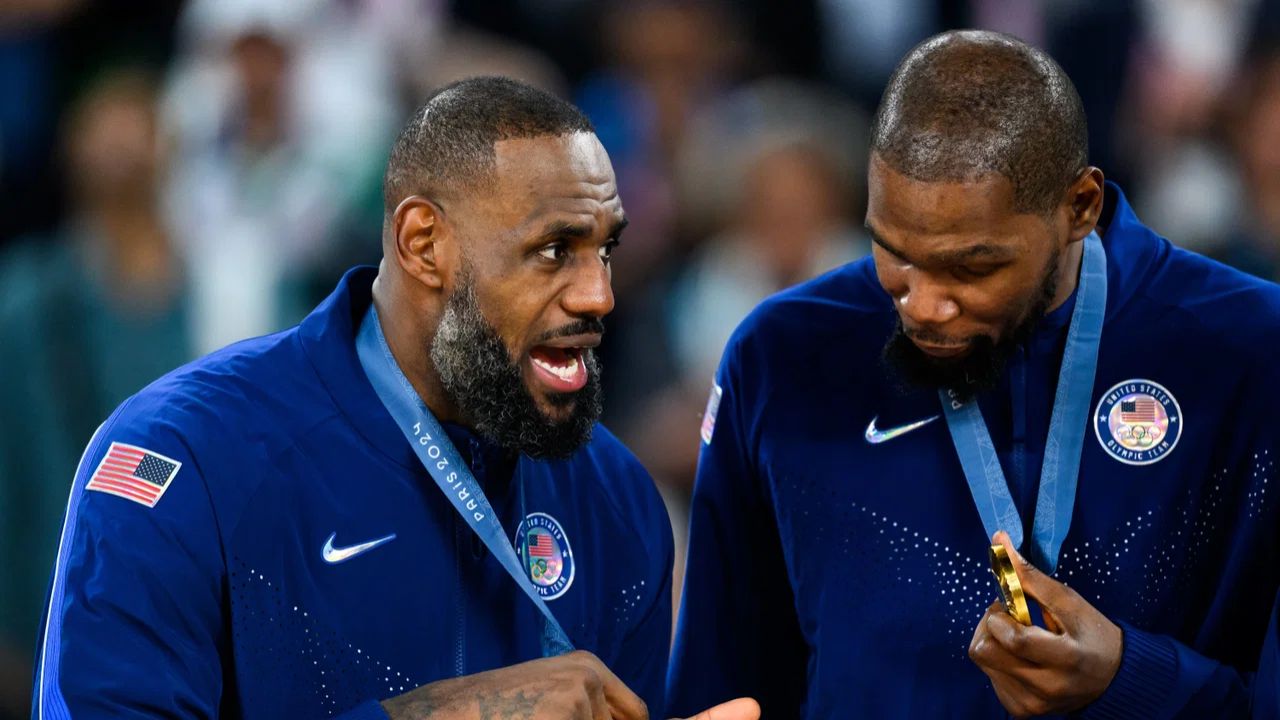
LeBron James and Kevin Durant are among the major investors backing the Futures Basketball League (FBL), a new high school competition scheduled to begin in April 2027. But this is not simply another basketball tournament. As co-founder Jason Stein explained, the league is looking to address a problem that has followed elite prospects for years.
“The top 150 basketball players under 18 in the country play on over 200 different teams in seven different leagues in the spring and summer season. And it’s not fair they don’t get fair value for their NIL and they don’t get professional coaching structure — so this needs to exist.”
LeBron James and Kevin Durant’s New League Has Its Eyes on Nike’s EYBL
The Futures Basketball League plans to bring 120 prospects from the high school classes of 2028 through 2031 into 12 regional teams. Its inaugural season will run from April through August 2027, featuring 10 league weekends followed by a national championship event.
The timing, however, makes this development particularly interesting. FBL’s spring and summer schedule overlaps with Nike’s Elite Youth Basketball League (EYBL), one of the biggest platforms for elite high school basketball prospects.
Nike established EYBL in 2010 to bring AAU travel teams together and create a national championship for youth basketball. Its Peach Jam tournament, which began in 1996, has since become one of the most important events on the grassroots calendar.
The circuit’s influence is reflected in its recruiting numbers. For the 2027 high school class, 68 of the top 100 prospects are part of Nike EYBL, compared with 19 in Adidas’ 3SSB circuit and five each in Puma Pro16 and Under Armour.
That gives FBL a significant challenge. It isn’t entering an empty market where young players are waiting for a new opportunity. It is entering a system where established brands already have relationships with some of the country’s best prospects.
There is also an interesting connection between the investors and the competition. Both LeBron and Durant have longstanding relationships with Nike, with James signing a lifetime deal with the company in 2015.
Durant even praised the EYBL system in a May 2025 interview with Nike, saying its development pathway had helped young players move through the sport.
“They built a culture around being an amateur player who could move into the college ranks and into the pros.”
Now, the two superstars are backing a league whose schedule overlaps with that same circuit. However, FBL co-founder Jason Stein has indicated that the new competition wants to work with footwear companies rather than shut them out.
He told Sports Business Journal that discussions with shoe companies had been constructive. Whether that cooperation can work during overlapping competition schedules remains an important question, particularly for prospects who already have relationships with established programs.
The $6 Million Investment Behind LeBron and Durant’s League
The competition for young talent is only one part of the story. FBL is also building a business model that gives investors and players a financial stake in its future.
Each team has reportedly been priced at $6 million, with investors receiving equity in the league itself rather than simply purchasing an individual franchise. Stein also confirmed that tens of millions of dollars have already been committed through direct investments and team sales.
LeBron’s LRMR Ventures and Durant’s Boardroom Sports Holdings are among the founding partners. Derrick Rose, Paolo Banchero, Gary Vaynerchuk and other investors are also involved.
The league plans to generate revenue through team sales, sponsorships and media rights. However, there is an important distinction between what FBL has planned and what it has already secured.
Stein has indicated that the league intends to secure sponsorship agreements and a media-rights deal. No completed broadcast or sponsorship agreement was disclosed in the launch coverage.
The player compensation model is another major part of the project. Eligible prospects can choose to receive NIL compensation in cash, league equity or a combination of both, subject to administrative approvals.
FBL also intends to administer these agreements through the College Sports Commission to help ensure fair market value. Players will not be paid directly by the league or its teams, with the structure designed to protect their college eligibility.
However, the actual amounts involved remain undisclosed. The league has not explained how player equity will be valued or what happens to those shares if the business struggles.
Jason Stein believes introducing young athletes to financial responsibility early is important. Speaking about the challenges of managing money at a young age, he told Sports Business Journal:
“Obviously, that’s a real responsibility for us to manage, and for the athletes and families and agents. But better for athletes to begin that process with a smaller amount of money, at a younger age, than to receive $2M, $3M, $4M, $5M, $10M over the [following] couple years and then try to figure that out.”
That approach could give FBL an advantage when approaching families. But asking teenage athletes to consider equity in a new league also creates questions about valuation, financial guidance and long-term security.
Maverick Carter Explains Why Futures Basketball League Was Created
For Maverick Carter, the project is connected to his own experience growing up around basketball and watching the sport change.
Carter, LeBron’s longtime business partner and an FBL co-founder, believes the opportunities available to young athletes have grown, but the support around them has not kept pace.
“As someone who grew up playing grassroots and then college ball, and watched another kid from Akron completely change the landscape of high school basketball, I’ve seen how the game has evolved over the years both for the athletes and the ecosystem surrounding them.”
“With interest in these athletes at an all-time high, I believe Futures is the premier league with the right infrastructure to really help grow and develop players while setting them up for long-term success.”
Durant’s involvement also builds on his previous investment in MADE Hoops, a grassroots basketball platform that received backing from LRMR Ventures, Boardroom Sports Holdings and other investors in November 2025.
MADE Hoops will now serve as FBL’s operations partner, bringing its experience in organizing grassroots basketball events to the new competition.
HMBL Development will oversee player training and individualized development plans. The programme is expected to include coaching, strength and conditioning, recovery support, sports science, mentorship and education.
This is where FBL wants to separate itself from simply being another tournament on the basketball calendar. Its objective is to create a more complete development structure around young players rather than focusing only on the games they play.
However, building that infrastructure across 12 regional teams will be a considerably bigger challenge than providing resources through an existing development centre. How consistently players receive those services throughout the league remains to be seen.
Derrick Rose Wants to Give Young Players What He Never Had
Among the investors, Derrick Rose brings a particularly personal connection to the project.
The former NBA MVP grew up playing grassroots basketball in Chicago, where his family played a major role in protecting and guiding him through his development. He will also serve as a founding team owner, leading the Chicago team.
Rose believes many talented young players do not receive the same support that helped him reach the NBA. He explained why the project appealed to him:
“It’s something that I wish that I would have had when I was playing when I was a youngster.”
He also reflected on how his own journey shaped his decision to get involved.
“I came up through the grassroots circuit in Chicago, and I saw how much talent could benefit from real structure and support. I was lucky — my brothers built a wall around me and made sure the right people were in my corner.”
“Most young players don’t have that. Futures gives them that kind of protection and support, off the court as much as on it.”
Rose has also spoken about taking a hands-on approach when recruiting players for his team. Rather than simply focusing on their basketball abilities, he wants to understand their backgrounds and what kind of help they need.
“I’m just going to ask some simple questions about what they’ve done before I met them—and how I can help them moving forward.”
His involvement adds another dimension to FBL’s development plans. The league is not only looking to attract talented players but also wants to provide guidance as they begin navigating the business side of basketball.
FBL has also pledged $1 million to the MADE For All Foundation, which supports scholarships and community initiatives for young players, basketball programmes and facilities.
Can LeBron and Durant Convince the Best Prospects to Join?
For all the investment and star power behind the project, FBL still has one major hurdle to overcome: proving that it can attract the players it promises to develop.
Stein has said that the league has already received a number of player commitments, with prospects from the 2028 through 2031 classes beginning to sign NIL agreements. However, no specific prospects have been publicly identified in the launch coverage.
The first player announcements are expected in the coming weeks. Those names will be important in determining how seriously the basketball community views the new competition.
FBL is entering a market where Nike, Adidas and Under Armour already have established relationships with players, coaches and grassroots programmes. EYBL, in particular, has a long history of providing exposure to college recruiters.
The new league will need to convince families that its financial opportunities and development resources are worth considering alongside those existing pathways.
There are also broader questions about whether its model can deliver what it promises. Securing a media-rights agreement, attracting sponsors and maintaining the quality of its 12 regional teams will all be important to its long-term future.
The Aspen Institute’s Tom Farrey has previously raised concerns about the direction of youth basketball, particularly the growing commercial focus on young athletes.
He described the current system as one that is:
“Commercializing and monetizing them at every stage without any adherence to athletic or child development principles.”
That concern makes FBL’s promises of education, mentorship and structured development especially important. But the league will ultimately have to demonstrate that those resources reach the players and make a real difference.
The challenge is particularly interesting given the people behind the project. LeBron James and Kevin Durant have benefited from the basketball ecosystem that FBL now hopes to reshape, while Rose’s experience has given him a personal reason to support a different approach.
Their investment gives the league considerable attention before its first game has even been played. But attention alone will not guarantee that the country’s best prospects choose to participate.
FBL’s inaugural season is scheduled for April 2027, and its first player announcements could offer the clearest indication of what lies ahead. Whether it becomes a genuine alternative to Nike’s established circuit or another competitor in an already crowded market will depend on what happens next.