
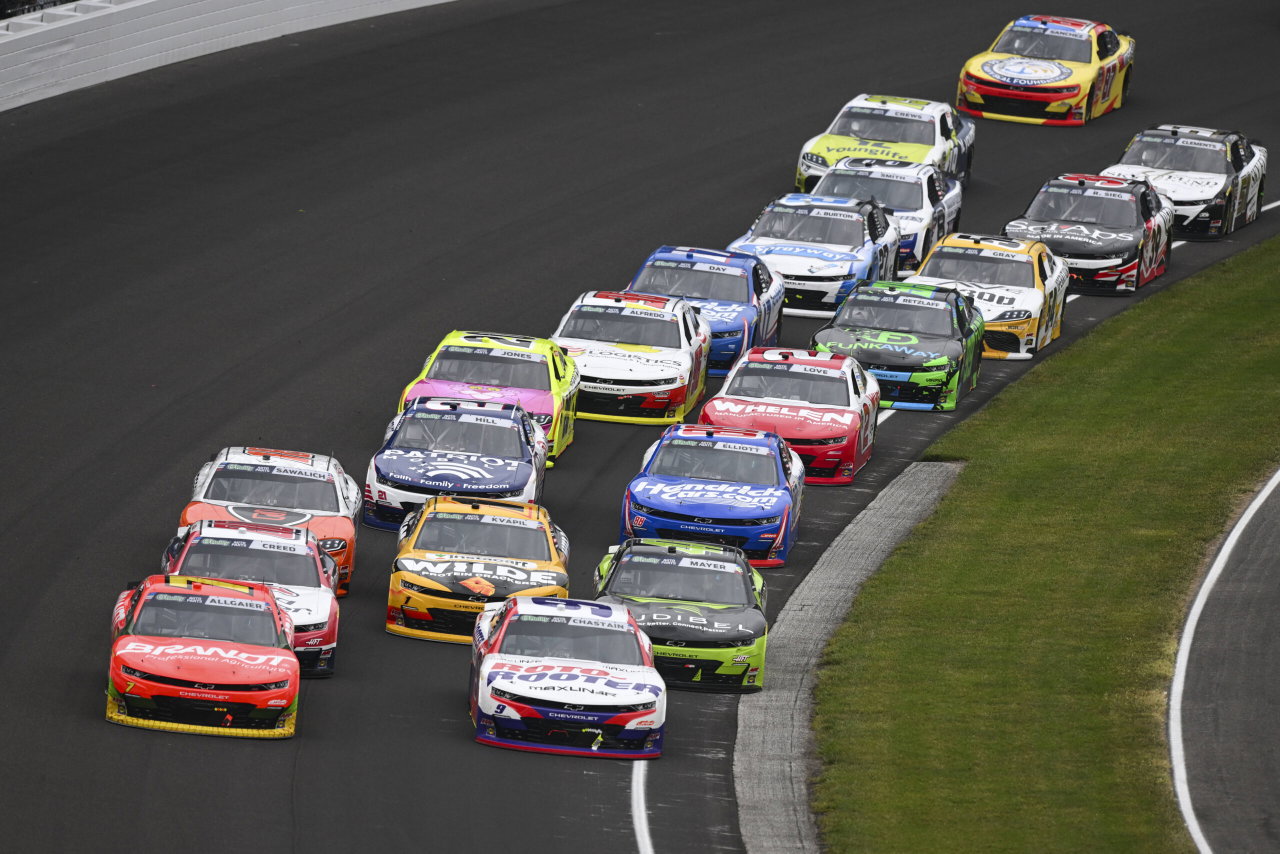
Peterson Racing had a difficult decision to explain after Austin Green lost his seat in the No. 87 car. With just three races left in 2026, fans began questioning why the team had to pull the plug now. Social media was flooded with questions, and the team’s responses only added to the frustration. “Ask Austin Green,” read one response, adding fuel to the fire.
Watch What’s Trending Now!
By Wednesday, October 21, the team had issued a public apology for how it handled the backlash, acknowledging that its own social media interactions had contributed to the tension. It also made its position on Green clear.
“We recognize the frustration and disappointment surrounding our decision to part ways with Austin Green, particularly regarding the changes to our driver lineup for Charlotte, Phoenix, and Talladega,” the team said in a statement on Wednesday.
There is a reason the reaction has gone beyond an ordinary driver change. Green spent three seasons with Peterson Racing, competing in the CUBE 3 Architecture TA2 Series in 2023 and 2024 before moving into NASCAR O’Reilly Auto Parts Series competition on a part-time basis. The 2026 season was supposed to mark his first full-time campaign with the team.
However, his full-time run came to an end after the season’s first 16 races, when Peterson Racing brought in Nick Sanchez to evaluate and improve the No. 87 Chevrolet’s performance. Green remained with the organization and, in October, was allowed to return for the final three races at Charlotte, Phoenix, and Talladega.
That arrangement soon fell apart. Green finished 23rd at Charlotte Motor Speedway on October 10, but Peterson Racing subsequently announced that Sanchez would drive the No. 87 at Phoenix Raceway. Then, on October 19, Lee Pulliam confirmed that he would take over the car at Talladega Superspeedway, leaving Green without the final two starts he had expected to make.
For supporters who had expected Green to finish the season with Peterson Racing, the back-to-back changes raised an obvious question. Why had the team abandoned its original plan? The decision to part ways with Green, confirmed on October 21, only intensified those concerns.
Peterson Racing did not offer a detailed explanation for the changes in Wednesday’s statement. It did, however, make its position on Green clear.
“We want to make one thing clear: Peterson Racing supports Austin Green.”
The team might have faced criticism over its lineup regardless. What made the dispute harder to contain was the way it responded when fans began asking questions.
On Monday, Pulliam confirmed he would drive the No. 87 in the Progress Group 250 at Talladega. Peterson Racing’s account on X subsequently claimed there had been no change to its Talladega lineup. When users questioned the arrangement involving Green, the account repeatedly replied, “Ask Austin Green.”
That response put Green at the center of a dispute over a decision made by the team. It also did little to explain why he was no longer driving, particularly after supporters had expected three more starts. Some users later reported that their accounts had been blocked after commenting on his departure.
Peterson Racing’s performance adds another layer to the situation. The team entered 2026 looking to establish itself in the NASCAR O’Reilly Auto Parts Series, but the No. 87 car was still chasing its first win. By August, it had recorded four top-10 finishes. Sanchez’s arrival was part of the team’s effort to improve its results, although Peterson Racing has not explained how performance concerns factored into its decision to part ways with Green.
The team subsequently addressed its online conduct in Wednesday’s statement.
“We also acknowledge that some social media interactions associated with our organization have contributed to the tension. We apologize for those exchanges and recognize that we should have handled them more professionally.”
The admission matters because the team could have simply defended its right to change drivers. Instead, it acknowledged that its responses had helped turn criticism into a wider confrontation. Peterson Racing also said it would review its social media moderation practices, including concerns about blocked accounts.
The organization also addressed the hostility directed at everyone involved.
“Disagreement is understandable, but personal attacks against anyone involved are not acceptable,” the team said, referring to the abuse aimed at Green, his supporters, Peterson Racing, and its team members.
It stressed that supporting the team should not mean abandoning Green, and supporting Green should not require turning against the organization. However, the apology acknowledges poor communication without explaining in detail why Green’s planned three-race return became a single appearance.
Peterson Racing turns its attention to 2027
The controversy comes as Peterson Racing prepares to expand its NASCAR programme. Pulliam is scheduled to drive the No. 87 at Talladega and Martinsville Speedway before Sanchez returns for the season finale at Homestead-Miami Speedway. Pulliam will then take over the No. 87 full-time in 2027, with Harrison Burton joining the organization in a new No. 78 Chevrolet.
Two full-time entries represent a significant next step for the team. They also make its relationship with supporters more important. Driver changes are part of racing, and teams must be able to make decisions about their lineups. But when expectations change, explaining why matters almost as much as the decision itself.
Peterson Racing has acknowledged that its social media responses fell short and says it will review how it handles criticism. That is a start. Green’s departure, however, remains the decision that prompted the backlash, and the team has yet to provide a full public explanation of how the original plan unravelled.
With its 2027 lineup taking shape, Peterson Racing has a chance to move forward. Whether this apology closes the dispute will depend on more than a statement. It will depend on how the team communicates when its next difficult decision arrives.