More on WNBA
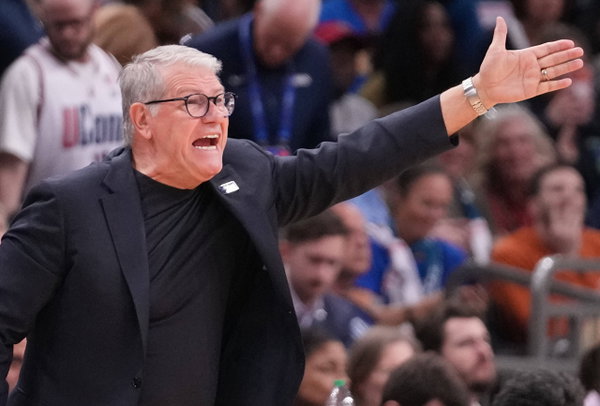
Geno Auriemma Voices Frustration With UConn Freshman as Huskies Wrap Undefeated Exhibition Run
Geno Auriemma was not happy with reserve center Olivia Vukosa's approach in the preseason game against the Army.
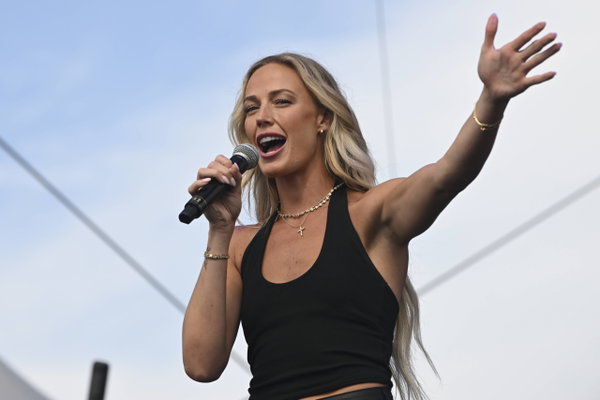
Sophie Cunningham Steals the Spotlight at US Grand Prix Alongside Olympic Gold Medalist
Sophie Cunningham at the 2026 US Grand Prix, linking up with Olympic gold medalist Gabby Thomas as her cross-sport appearances continues.
WNBA Finals Faces Venue and Time Uncertainty Ahead of Crucial Game 6 as Scheduling Chaos Looms
After the Golden State Valkyries defeated the Atlanta Dream to level the series score, Game 6 faces uncertainty regarding its venue and date.
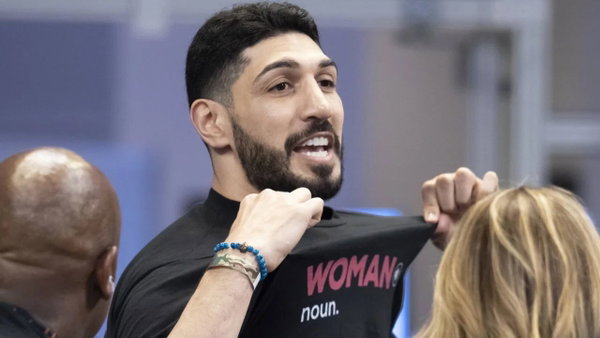
“I’m Allowed to Use the Same Bathroom”: Enes Kanter Points to ‘Uncomfortable’ Reality of Potential WNBA Eligibility
Enes Kanter tried to prove his point in ongoing gender controversy in the WNBA with a changing room scenario.
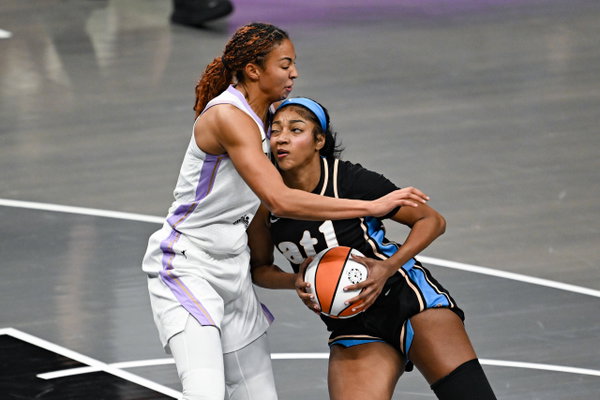
“Made Angel Reese Go Left”: ESPN Broadcaster Dissects Valkyries’ Strategy That Dismantled Dream in Game 4
ESPN broadcaster Ryan Ruocco explains how the Golden State Valkyries restricted Angel Reese in Game 4 of the WNBA Finals.
“She a Real Dawg”: Ex-NBA Player’s Daughter Earns Flau’jae Johnson’s Praise After Dominant UNC Performance
Flau’jae Johnson praises UNC freshman Kate Harpring after her 29-point performance against Maryland, warning that the ACC is in trouble.
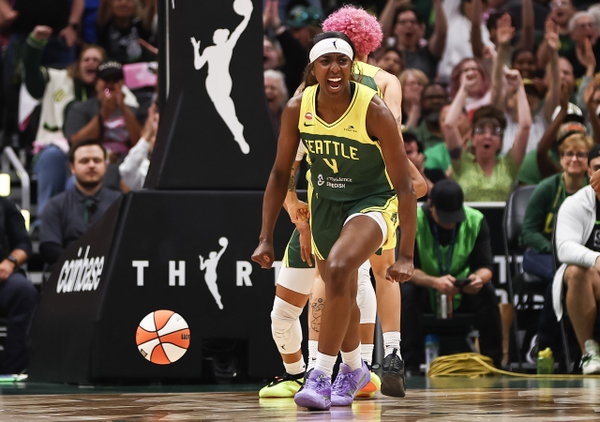
Tennis Fans Call Out Caitlin Clark Misinformation as Coco Gauff Gets Dragged Into Debate
Coco Gauff’s $33 million earnings draw attention as tennis fans challenge claims about Caitlin Clark’s place among the world’s top-paid female athletes.
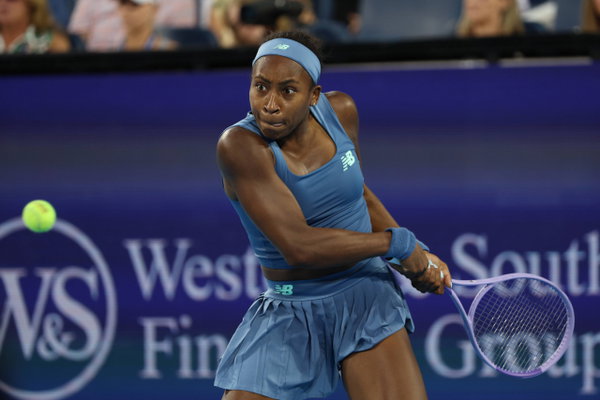
“Show Em What The Crowd Really Do”: Valkyries Star Teases Dream Of Upcoming Treatment Before Game 5 Of The Finals
Tiffany Hayes gives her thoughts after the win in Game 4 of the Finals and looks forward to playing Game 5 at home
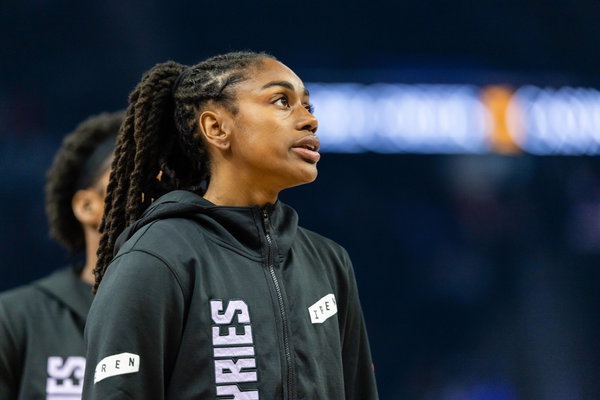
Sophie Cunningham Headlines Star-Studded Guest List at US Grand Prix Alongside Joe Rogan & Others
Sophie Cunningham and other notable stars make their way to Austin to attend the Sunday's Formula 1 United States Grand Prix in Austin
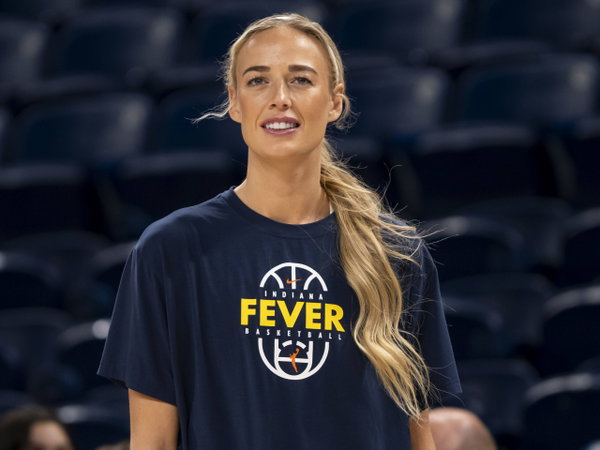
“One Of The Most Incredible Atmospheres”: WNBA Broadcaster Teases What Awaits Atlanta Dream Before Game 5 Of The WNBA Finals
WNBA analyst points out the incredible atmosphere that awaits both teams in the crucial Game 5 of the WNBA Finals
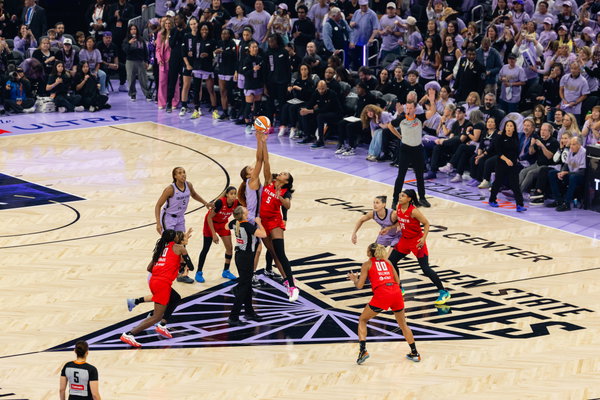
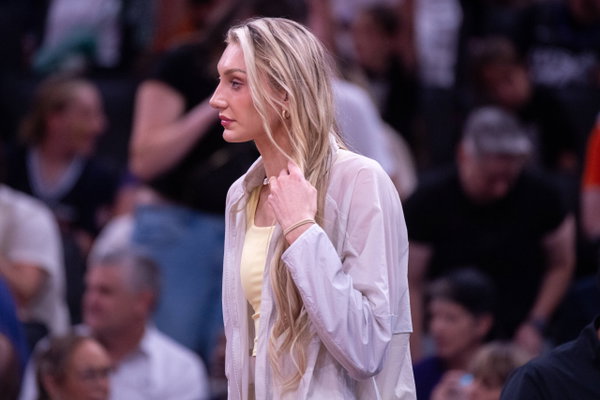
Olivia Miles, Kate Martin & Others React As Cameron Brink Turns Heads In Her Latest Social Media Activity
The world of women's basketball can't get enough of Cameron Brink after her latest social media post grabbed everyone's attention.
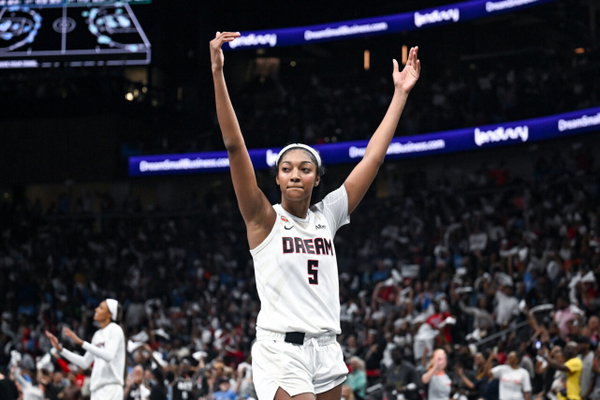
“Takes a Really Mentally Strong Player”: WNBA Broadcaster Offers Insight Into Angel Reese Doing Something Unusual During The WNBA Finals
WNBA analyst gives his thoughts on Angel Reese and praises her role as she stepped up in the WNBA Finals series
About WNBA
The Women's National Basketball Association (WNBA) is a women's professional basketball league, the women’s counterpart of the National Basketball Association (NBA). But unlike the men’s league, which has 30 teams, the WNBA is relatively newer and smaller with 12 teams.
Founded on April 24, 1996, the women’s basketball league began play in June 1997 after the NBA Board of Governors approved their concept. The WNBA now has a 5-month long regular season, played from May to September, with the All-Star game being played midway through the season in July. The playoffs usually begin in mid-September, with the WNBA Finals at the end of September until the beginning of October.
With names like Caitlin Clark and Angel Reese popularizing the NCAA side of things, the rookies’ advent into the pro leagues has helped the sport reach wider audiences across the globe. But veterans like Sheryl Swoopes and legends like Diana Taurasi are impacting the game in their own way.
For all the news on major sports moments to niche storylines, we are a one-stop hub for all your WNBA-related questions. From the New York Liberty to the Indiana Fever, from the Las Vegas Aces to the Minnesota Lynx, we also explore game-unrelated content featuring the entities’ personal lives and families. You’ll be able to find posts related to Brittney Griner’s son and A’ja Wilson’s family to Aerial Powers’ dating life.
Regular Season format
The pre-season begins with training camps in May that allow the coaching staff to prepare the players for the regular season and determine the 12-woman roster with which they will begin the regular season. The last part before the actual season starts is a series of exhibition games.
The WNBA regular season then begins in May and goes on till late September/ early October. As of 2023, each team will play 40 regular season games, 20 each home and away. As in the NBA, each team hosts and visits every other team at least once every season.
The rules allow for a slight relaxation every four years when the Summer Olympics are held. The WNBA takes a month off in the middle of the season to allow players to practice and compete with their respective national teams.
Similarly, during years in which the FIBA World Cup is held, the WNBA either takes a break for the World Cup or ends its season early, depending on the scheduling of the World Cup.
Postseason/Playoffs Format
The WNBA Playoffs usually begin in late September, with the only exception being the FIBA World Cup, when they begin in August. In the current system, the eight best teams by the regular-season record, without regard to conference alignment, qualify for the playoffs. Since 2022, the playoffs have been held in a standard knockout format, with the first round consisting of the best-of-three series and the semifinals and finals being best-of-five.
Leading the playoff standings and having a higher seed means several advantages - they will face weaker teams in the beginning and have home-court advantage in each round. In the current playoff format, all first-round matchups use a 2”“1 home-court pattern, which allows the higher seed the opportunity to win the series without having to visit the lower seed. This, in turn, means that a lower seed that wins one of the first two games will host the series decider.
The first round is bracketed in the normal manner for an 8-team tournament, with 1 vs. 8 and 4 vs. 5 on one side of the bracket and 2 vs. 7 and 3 vs. 6 on the other. The winners of each series advance to the semifinals, with the bracket not being reseeded. The semifinals use a 2”“2”“1 home-court pattern, meaning that the higher-seeded team will have home court in games 1, 2, and 5 while the other team plays at home in games 3 and 4. The Finals are also played in a 2”“2”“1 home-court pattern.
WNBA’s All-Star Game
In the middle of the season in July, the WNBA season takes a pause to host the annual WNBA All-Star Game. It’s a weekend-long event, held in a selected WNBA city each year.
Like numerous other sports, through the 2017 edition, the All-Star Game featured star players from the Western Conference facing star players from the Eastern Conference. But since 2018, conference affiliations have not influenced team selections.
During the season, voting for All-Star starters takes place among fans, WNBA players, and sports media members. The starters are selected by a weighted vote (fans 50%, players and media 25% each), while reserves are selected by the league's head coaches. The two players with the most fan votes are named team captains, who then fill out their teams in a draft format similar to that currently used for the NBA All-Star Game.
WNBA Teams which are counterparts of NBA teams
Five WNBA teams have direct NBA counterparts and normally play in the same arena: Indiana Fever (Indiana Pacers), New York Liberty (Brooklyn Nets), Minnesota Lynx (Minnesota Timberwolves), Los Angeles Sparks (Los Angeles Lakers), and Phoenix Mercury (Phoenix Suns).
The Atlanta Dream, Chicago Sky, Connecticut Sun, Dallas Wings, Las Vegas Aces, Seattle Storm, and Washington Mystics do not share an arena with a direct NBA counterpart.
WNBA expansion over the years
The WNBA originated with 8 teams in 1997, and through a sequence of expansions, contractions, and relocations currently consists of 12 teams. There have been a total of 18 franchises in WNBA history.
As of the league's most recent 2022 season, the Las Vegas Aces (formerly the Utah Starzz and San Antonio (Silver) Stars), Los Angeles Sparks, New York Liberty, and Phoenix Mercury are the only remaining franchises that were founded in 1997.
Upcoming teams in the WNBA:
| Team | City | Arena | Capacity | Joining | Head Coach |
| Golden State Valkyries | San Francisco, California | Chase Center | 18,064 | 2025 | TBA |
| Toronto WNBA Team | Toronto, Ontario | Coca-Cola Coliseum | 8700 | 2026 | TBA |
Teams with the most championships
| Team | Total Championships | Year(s) Won |
| Minnesota Lynx | 4 | 2011, 2013, 2015, 2017 |
| Houston Comets | 4 | 1997, 1998, 1999, 2000 |
| Seattle Storm | 4 | 2004, 2010, 2018, 2020 |
| Los Angeles Sparks | 3 | 2001, 2002, 2016 |
| Phoenix Mercury | 3 | 2007, 2009, 2014 |
| Detroit Shock (Now Dallas Wings) | 3 | 2003, 2006, 2008 |
| Las Vegas Aces | 2 | 2022, 2023 |
Awards given in the WNBA
When the regular season ends in September (or August if it’s a FIBA year), the voting for individual awards begins. Performances in the playoffs have no bearing on all-season-long awards, as they have their own set of honors.
Beginning with Rookie of the Year, the award goes to the most outstanding first-year player. The Most Improved Player Award is given to the WNBA player who has undergone the most positive change in the last season.
The Sixth Player of the Year Award, previously known as the "Sixth Woman" award, is given to the best player coming off the bench. But they must have more games coming off the bench than actual games started.
Another prestigious honor is the Defensive Player of the Year Award, which goes to the league's best defender. There is also an award for the best sportsman, called the Kim Perrot Sportsmanship Award.
Coaches get recognized too with the Coach of the Year Award for making a significant difference to a team in a positive direction.
And finally, one of the most awaited awards, the Most Valuable Player Award is given to the player deemed the most valuable for her team that season.
A new title that began in 2019 is a season-long version of the WNBA Community Assist Award given to a player for her exceptional contribution to community service.
Focusing on teams, there is the Basketball Executive of the Year Award, presented to the team executive most instrumental in his or her team's success in that season. Then there are also the All-WNBA Teams, the All-Defensive Teams, and the All-Rookie Team, consisting of 5 players each without regard to position. And lastly, there is also an All-Rookie team, consisting of the top five first-year players regardless of position.